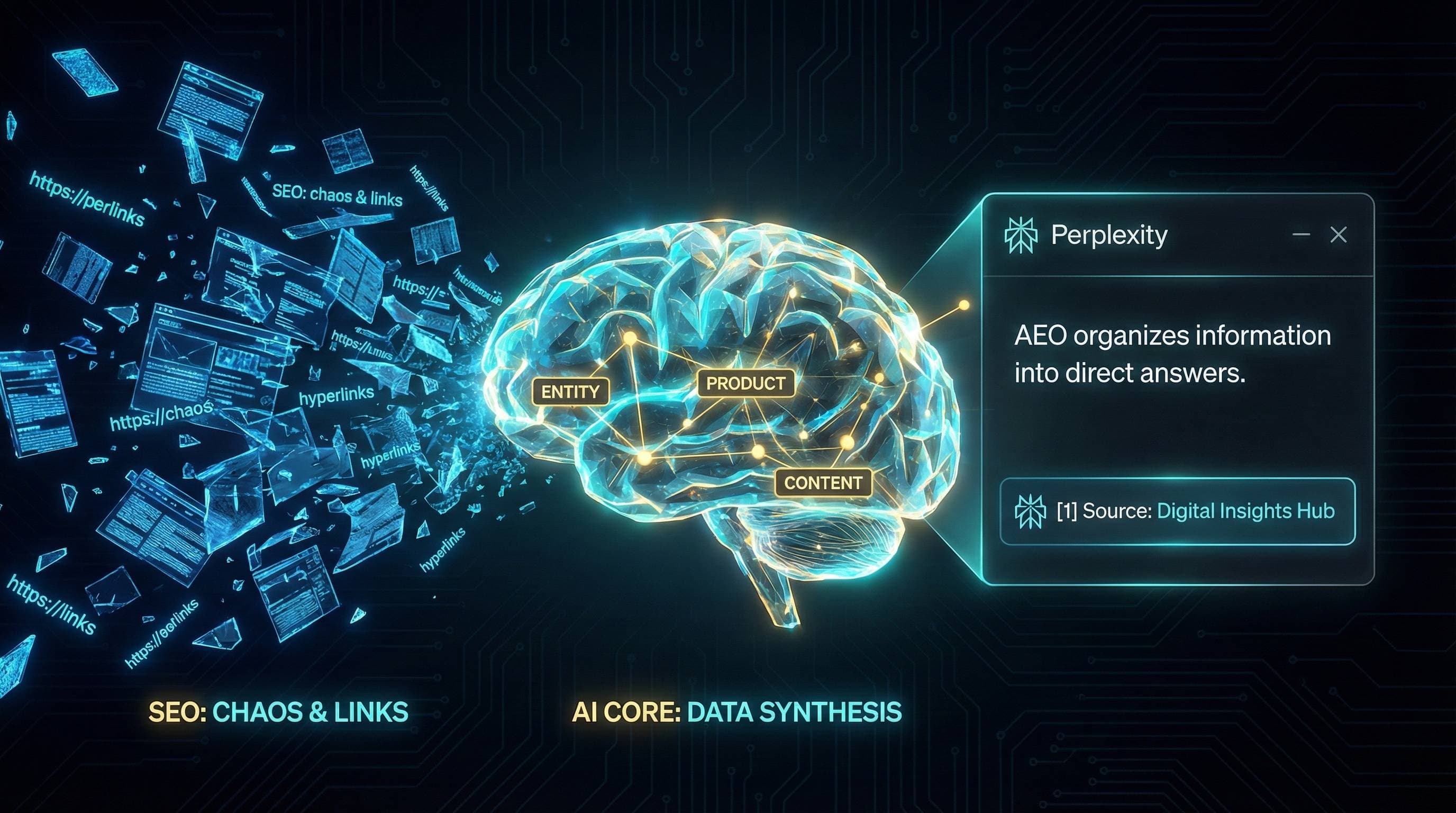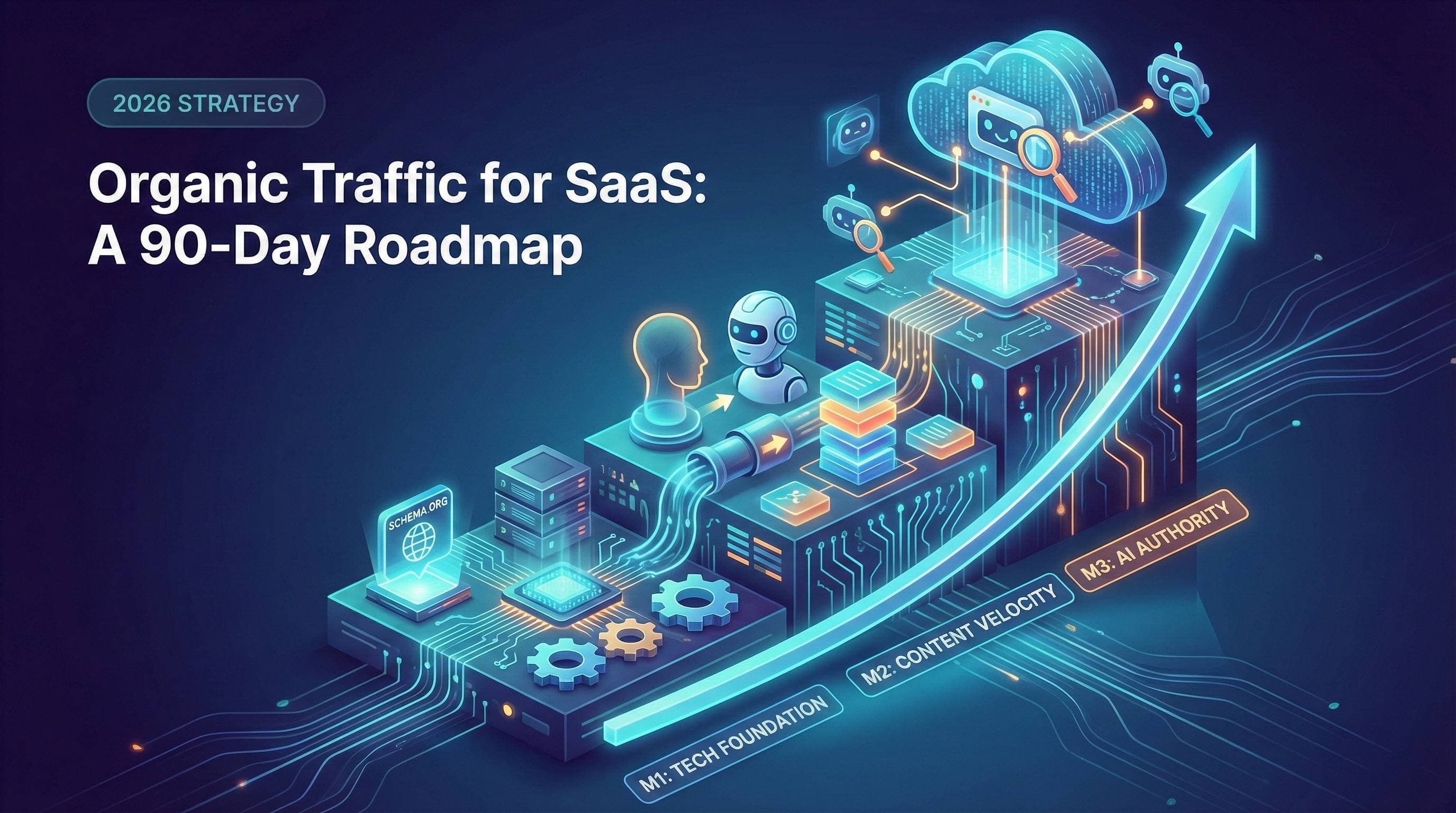
Learning how to grow organic traffic SaaS in 2026 means moving beyond basic keyword optimization to master "Entity Authority" and "Citation Optimization." It is the strategic process of building a digital footprint that Google and AI search engines like ChatGPT and Perplexity can easily crawl, understand, and cite as a primary source. This matters now because the search landscape has shifted from providing a list of links to providing direct answers—making your brand's presence in those answers the new #1 ranking.
But here is the kicker: 16% to 20% of all search queries now trigger an AI Overview (AIO) that effectively hides traditional organic results below the fold, according to 2025 data from Semrush. If you are a solo founder, you are likely feeling the squeeze. You ship features. You ship bug fixes. But your blog? It’s probably collecting dust. This 90-day roadmap is designed to change that without requiring you to turn into a full-time journalist.
1. Understanding Startup Organic Traffic in 2026
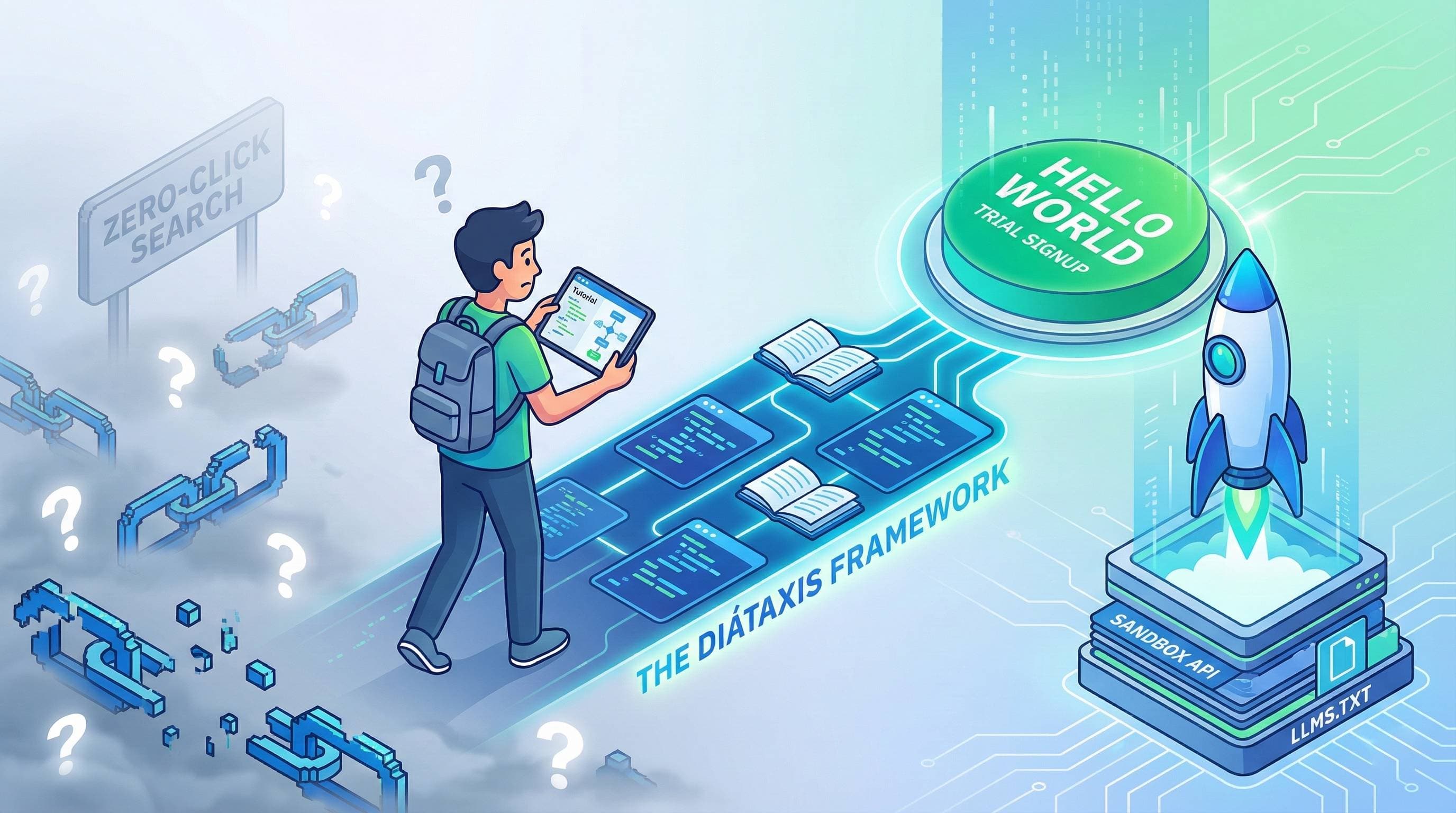
Search has changed. It used to be simple—find a keyword with high volume, write a long post, and wait. That model is broken. In 2026, we are dealing with "Click Collapse." When users ask a search engine how to do something, the AI often answers them right there on the results page.
Research from Promodo in 2026 indicates that blogs with posts averaging 2,000+ words see an organic traffic growth rate 293% higher than those with shorter, fluffier content. However, volume alone won't save you. You need to target the "Pain-Point SEO" keywords that AI can't easily summarize away—questions that require your specific product as the answer.
As Rand Fishkin, Co-founder of SparkToro, notes: "The way to improve is to improve your marketing and the experiences people have off of your website. Influence has always been better than traffic." For a solo founder, this means your goal isn't just 10,000 visitors; it's 100 of the right visitors who have a credit card in hand.
Key Takeaway: Traffic is a vanity metric; SQLs (Sales Qualified Leads) are the only thing that pays the bills.
2. Month 1: The Technical and Keyword Foundation
Your first 30 days should be spent on the foundation. Most founders ignore technical SEO because it isn't "fun," but if your site structure is a mess, Google won't bother indexing your brilliant insights.
Technical "Absence of Errors"
Kyle Roof, a well-known SEO researcher, argues that the #1 ranking factor is often not doing something brilliant, but simply not having disqualifying technical errors. Start by checking your Core Web Vitals. According to 2025 industry benchmarks, a site that loads in under 2.5 seconds has a significantly lower bounce rate, which is a massive ranking signal.
Mapping the Intent
Stop chasing high-volume keywords like "logistics software." You’ll get crushed by incumbents. Instead, find the gaps.
- Comparison Keywords: "ShipContent vs. Competitor X."
- Alternative Keywords: "Alternative to [Expensive Enterprise Tool]."
- Specific Integration Keywords: "How to automate return labels on Shopify Plus."
These queries have lower volume but much higher conversion rates. Data from The Digital Bloom in 2025 shows that while broad traffic converts at less than 1%, high-intent "pain-point" traffic can convert at 5% or higher.
Setting up Schema
You need to tell the machines who you are. Use Schema.org markup to define your "Entity." This includes Organization schema, SoftwareApplication schema (for your pricing and features), and Person schema for yourself. AI engines use this structured data to verify facts.
3. Month 2: The Content Velocity Phase
Now we get to the actual building. Many founders struggle here because they try to write every word from scratch. That's a recipe for burnout.
The Hybrid AI Workflow
In 2026, generic AI content is invisible. It's "over-optimized garbage" that users and algorithms both ignore. But you can use a hybrid approach. Use AI to outline and draft, then spend 20 minutes injecting your "lived experience." Add a screenshot. Add a specific story about a customer.
Statistics show that high-frequency publishing—at least 9 posts per month—correlates with a 41.5% increase in year-over-year traffic compared to sporadic posting (Promodo, 2026). If you can't hit that, your blog will feel like a ghost town.
The Content Stack for Month 2
| Content Type | Purpose | Intent Level |
|---|---|---|
| The "Vs" Page | Steal traffic from competitors | High (Transactional) |
| The "How-To" Guide | Solve a technical problem | Medium (Consideration) |
| The Product Manifesto | Build E-E-A-T and founder authority | Low (Awareness) |
Why Depth Matters
Don't just write a list of tips. Citing sources is non-negotiable for GEO. Research from RevenueZen in 2025 shows that SEO generates $22.24 for every $1 spent, but only if the content is perceived as authoritative. Use numbers. Cite studies. Quote other founders.
This is exactly what we built ShipContent to solve. If you'd rather spend your weekend shipping code than wrestling with content briefs, our product-aware AI scrapes your tool and researches your market to ship posts that actually sound like you. No fluff. Just results.
4. Month 3: Optimization and AI Engine Citations
By day 60, you should have a small library of content. Now you need to make sure the world—and the bots—actually see it.
The "Hidden Gems" Strategy
Google now prioritizes "Hidden Gems"—content from forums like Reddit and niche communities. If people are talking about you on Reddit, you'll rank higher. Spend time answering questions in r/SaaS or r/logistics. Don't drop links like a spammer. Just be helpful. Search engines are looking for this consensus.
Citation Prominence
To get cited by Perplexity or Gemini, your content must be machine-readable.
- Use clear H2 headers that are phrased as questions.
- Provide the answer in the first sentence under the header.
- Use bulleted lists for technical specs.
Distribution: Create Once, Distribute Forever
Ross Simmonds, CEO of Foundation Marketing, famously advocates for spending 50% of your time on creation and 50% on distribution. A single blog post should be turned into a LinkedIn thread, a newsletter, and three Reddit comments. This isn't just for traffic; it's for building "branded search volume." When people start searching for "ShipContent shipping tool" instead of just "shipping tool," you’ve won the SEO game.
5. Measuring Success Beyond Vanity Metrics
Stop checking your total sessions every morning. It’s bad for your mental health. Instead, look at these three metrics:
- Branded Search Volume: Are more people searching for your company name?
- Assisted Conversions: Did a blog post help a user decide to sign up even if they didn't click "Buy" immediately?
- Citation Count: Is your brand appearing in AI summaries for your core keywords?
According to The Digital Bloom (2025), the MQL to SQL conversion rate for B2B SaaS typically sits between 15% and 21%. If your content is bringing in the right people, these numbers should stay steady even if total traffic looks lower than you'd like.
[!WARNING] Is your traffic flat despite following this plan? You might be stuck in the "CTR Gap." Read our guide on Why Your Organic Traffic Roadmap is Stalling to troubleshoot the "Ghost Impressions" problem.
Summary Checklist for Solo Founders
- Week 1-4: Fix technical errors and map "Pain-Point" keywords.
- Week 5-8: Ship 8-10 high-quality, long-form posts using a hybrid workflow.
- Week 9-12: Distribute on Reddit/LinkedIn and optimize for AI citations.
Building organic traffic is a marathon. Not a sprint. But for a bootstrapped startup, it's the most defensible moat you can build. While your competitors are burning cash on PPC (where the ROI is a measly $1.80 compared to SEO's $22.24), you're building a compounding asset that works while you sleep.
Ready to get started? You ship the features. Let ShipContent ship the traffic.